“`html
The Benefits of Using Storytelling in History Lessons
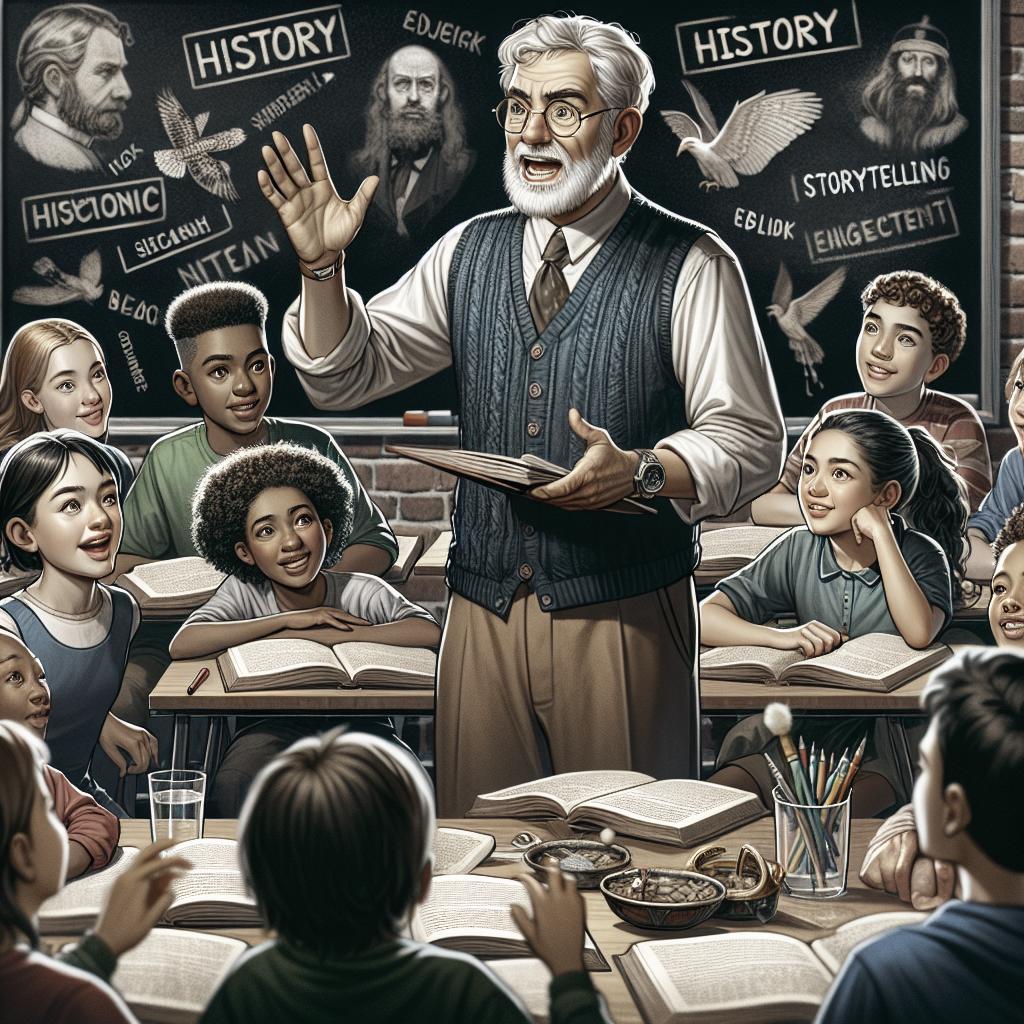
History is more than a mere recount of dates and events; it’s a tapestry of human experiences and narratives. By incorporating storytelling into history lessons, educators can ignite students’ imaginations and foster a deeper understanding of the past. This method not only enhances engagement but also builds empathetic connections between historical figures and learners. Through stories, the complexities of history become more relatable, making learning both an educational and transformative experience. This blog explores the manifold benefits of using storytelling to teach history and advocates for a more imaginative approach to education.
Are we underestimating the value of students’ imaginations?
In a world dominated by technology and rapid information exchange, it is easy to overlook the power of imagination in education. When students engage with history through storytelling, they embark on creative journeys that bridge the gap between the past and the present. These narratives encourage students to imagine the world of historical figures, cultivating critical thinking and empathy. By visualizing scenarios and stepping into the shoes of people from different eras, students gain a multi-faceted understanding of historical contexts.
Furthermore, fostering imagination in history lessons can spark innovation and curiosity beyond the classroom. When students are tasked with creating their own versions of historical events through storytelling, they develop skills in research, interpretation, and communication. This approach not only caters to different learning styles but also ensures that students don’t merely memorize historical facts but engage with them on a personal level, laying a deeper foundation of knowledge.
More like this…
The power of storytelling in education extends beyond history lessons, offering significant benefits across various subjects. By incorporating narratives into science, literature, and even mathematics, educators can break down complex concepts into digestible, engaging stories. This approach helps maintain students’ interest, making learning an enjoyable adventure rather than a chore. As a result, students are more likely to retain information and apply it meaningfully in real-world situations.
Furthermore, storytelling in education promotes collaboration among students. Group projects that involve creating or analyzing stories encourage teamwork, communication, and the exchanging of ideas. As students work together to understand and present a narrative, they learn to appreciate different perspectives and develop important interpersonal skills. In this way, storytelling not only enriches academic content but also contributes positively to social and emotional development.
Popular in Publications
The resurgence of storytelling in education is not limited to classrooms; it has gained significant traction in educational publications and media. Popular educational journals and websites often highlight successful storytelling methods in history education, emphasizing its effectiveness in making historical content more relatable and interesting. These publications serve as valuable resources for educators seeking innovative methods to revitalize their teaching approach.
Moreover, educational conferences and workshops frequently feature sessions on the integration of storytelling into history curricula. Experts and educators share case studies, strategies, and tools that have proven successful in captivating students through narratives. The growing popularity of storytelling in educational discourse reflects a broader movement toward more dynamic, student-centered learning experiences that aim to prepare students not just academically, but as well-rounded individuals.
This resource is FREE for Secondary HA Members.
Access to storytelling resources can be a game-changer for history educators, and organizations like the Historical Association (HA) provide invaluable support. Secondary HA Members have access to a wealth of FREE resources, including story-based lesson plans, articles, and workshops designed specifically for engaging students in historical topics through narratives.
These resources offer practical guidance on implementing storytelling techniques, showcasing how narratives can transform mundane historical facts into vivid, memorable experiences. With the support of such organizations, educators are empowered to explore creative teaching methods that resonate with students and inspire a lifelong interest in history.
Final Thoughts
| Topic | Summary |
|---|---|
| Value of Students’ Imaginations | Encourages critical thinking and empathy; fosters innovation and curiosity; builds personal engagement with history. |
| Broader Educational Applications | Enhances learning in diverse subjects; promotes retention and real-world application; encourages collaboration and social skills. |
| Popularity in Educational Media | Widely discussed in educational journals and media; featured in conferences and workshops; highlights storytelling’s effectiveness. |
| Resources for Educators | Access to free resources for Secondary HA Members; provides practical storytelling tools and lesson plans; supports creative teaching methods. |
“`