“`html
Effective Strategies for Teaching Reading Comprehension
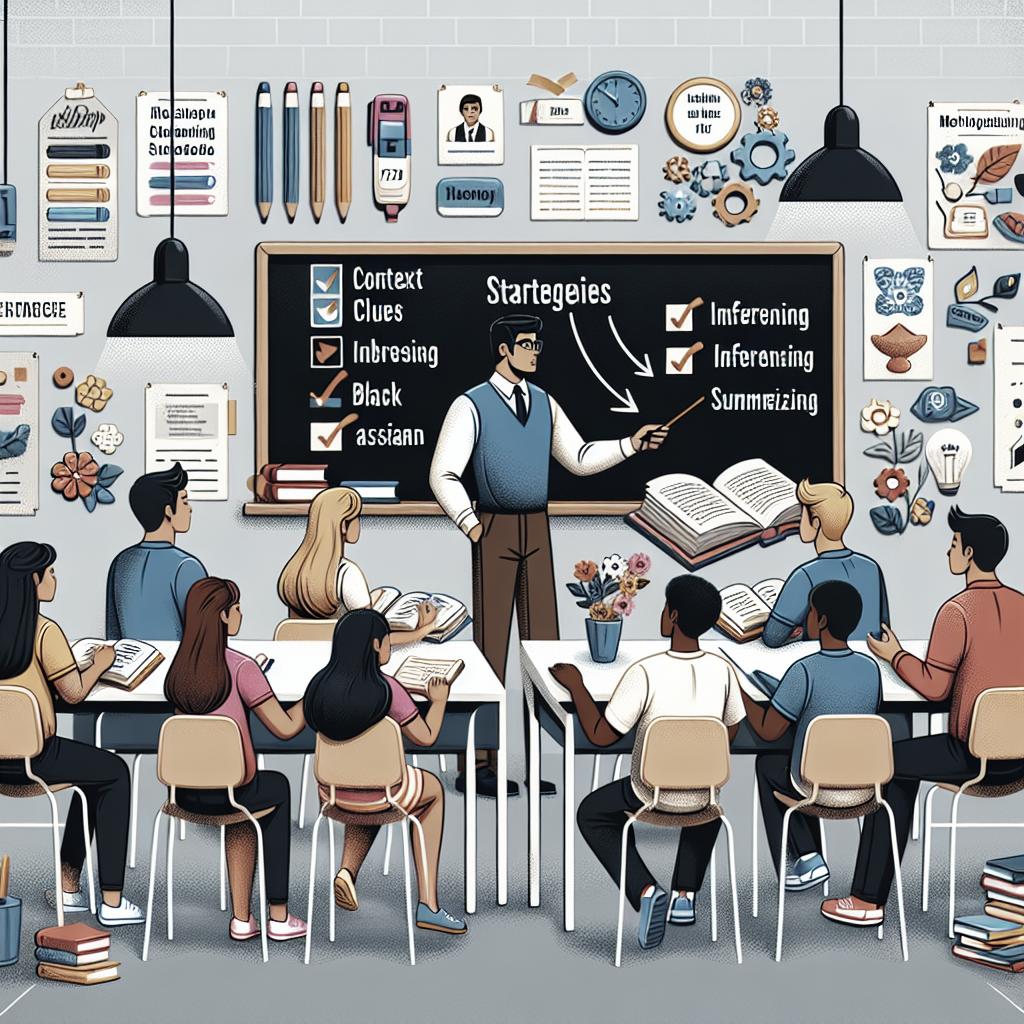
Teaching reading comprehension is crucial for students’ overall academic success and lifelong learning. This article explores effective strategies for enhancing reading comprehension across various educational stages, from early elementary to high school. We start with foundational techniques like using metacognition and activating prior knowledge for young learners. As students progress, strategies such as identifying text structures and making inferences become vital. For middle and high school students, advanced techniques are explored to deepen understanding and critical analysis. Tara Shanley’s research provides valuable insights into these strategies. The discussion spans across 17 key strategies, providing educators with a comprehensive toolkit to cultivate proficient readers. Whether you are a teacher or a parent seeking to improve a child’s reading comprehension, these strategies serve as a potent resource in facilitating comprehension skills development.
Early elementary (Grades K-2)
1. Using Metacognition
Metacognition involves thinking about one’s own thinking process. In early elementary education, fostering metacognitive strategies can greatly enhance reading comprehension. Teachers can guide students to reflect on what they know, identify areas of confusion, and employ strategies to make sense of texts. By practicing metacognition, young learners develop greater self-awareness and control over their understanding of books and stories.
Incorporating metacognitive prompts during reading sessions encourages students to pause and reflect. Prompts like “What do I know about this topic?” or “Am I understanding what I’m reading?” facilitate self-monitoring and encourage students to engage actively with the text. This reflective process empowers students to become more accountable for their learning journey, enabling them to take corrective measures when confusion arises.
2. Activating Prior Knowledge
Linking new information to existing knowledge is a fundamental strategy for comprehension. Activating prior knowledge prompts students to draw upon their experiences and background, creating connections with the text. This strategy not only aids in comprehension but also makes reading more relatable and engaging for young students.
Educators can facilitate this by asking questions such as “What do you already know about this topic?” before introducing a new book or story. This encourages students to access their existing knowledge base, allowing them to build bridges between the familiar and the unfamiliar. Through this approach, students become more invested in learning as they see the relevance of the new information within their personal context.
3. Building Background Knowledge
Building background knowledge is imperative in helping students relate to and understand new texts. Teachers play a critical role in expanding students’ understanding by introducing key concepts and vocabulary before delving into reading material. This prior exposure reduces cognitive overload and facilitates smoother comprehension.
For example, before reading a story about marine life, educators can introduce basic concepts like ocean ecosystems and marine species. By doing so, students enter the text with a foundational understanding that allows them to grasp more complex ideas. This approach encourages curiosity and enables students to engage more effectively with the reading material.
4. Previewing a Text
Previewing a text is a powerful strategy that provides students with an overview of what they are about to read. This initial exposure helps establish a purpose for reading, setting expectations and stirring curiosity. Teachers can guide students in examining text features such as titles, headings, and illustrations to gather contextual clues.
During this process, students can also make predictions about the content, allowing them to mentally prepare for the reading journey ahead. Previewing cultivates a sense of anticipation and enhances students’ ability to organize and retain information as they encounter it within the text.
5. Predicting
Predicting is a dynamic strategy that encourages students to anticipate what will happen in a text. By making predictions, students actively engage with the material, sparking curiosity and excitement for the narrative’s unfolding. This strategy encourages critical thinking and fosters an interactive reading experience.
Teachers can prompt students to predict by asking questions such as “What do you think will happen next?” or “How do you think this story will end?” As students compare their predictions to the actual storyline, they develop analytical skills, enhancing their ability to comprehend the text’s trajectory and meaning.
6. Self-monitoring Comprehension
Self-monitoring comprehension involves students recognizing when they do not understand parts of a text and taking steps to clarify their understanding. This proactive approach prevents frustration and promotes active participation in the reading process. It instills a sense of responsibility for their own learning.
Teachers can encourage self-monitoring by teaching students specific strategies, such as rereading, using context clues, and asking questions. As students implement these techniques, they become adept at assessing their comprehension in real-time and are equipped to employ corrective measures as needed, thereby ensuring a deeper engagement with the text.
7. Using “Fix-ups”
“Fix-ups” are strategies used to resolve comprehension breakdowns. When students encounter confusing passages, they need tools to help them regain control of the reading process. Teaching children to recognize when they have lost understanding and to employ fix-up strategies equips them for independent learning.
Teachers can introduce fix-up strategies such as summarizing the paragraph in their own words, identifying unknown words, and consulting reference materials. As learners practice these techniques, they develop resilience and confidence, which are integral to maintaining flow and comprehension during reading tasks.
8. Recognizing Story or Text Structure
Understanding the structure of a story or text enhances students’ ability to navigate and comprehend literature. Familiarity with components such as plot, characters, and sequence aids students in framing their understanding and expectations as they read.
Teachers can focus on identifying narrative elements during read-aloud sessions, using graphic organizers to map out the story structure. This visual representation helps students compartmentalize information and see the bigger picture, thus boosting their comprehension and retention capabilities.
9. Using Graphic Organizers
Graphic organizers are visual tools that help students organize information and grasp relationships between ideas within a text. These aids provide a structured way to capture main points, supporting details, and connections, thus making complex information more accessible.
Teachers can use graphic organizers such as Venn diagrams, story maps, and flowcharts to visually represent information. These visuals facilitate comprehension by breaking down extensive data into manageable and visible pieces, streamlining the cognitive process and aiding memory retention.
10. Visualizing
Visualization is a technique that involves creating mental images based on textual descriptions. When students visualize, they are more likely to connect with the material because they construct personal, vivid representations of the content in their minds.
Teachers can encourage visualization by asking students to draw scenes from the book or describe what they ‘see’ in their minds. This engagement with the text not only enhances comprehension but also fosters creativity and a stronger personal connection to the reading material.
11. Answering Questions
Answering questions related to the text is a strategy that promotes critical thinking and comprehension. This process involves students actively retrieving, recalling, and applying information, allowing them to deepen their engagement with the material.
Teachers can pose a variety of questions ranging from literal to inferential, challenging students to think beyond the surface-level details. This inquiry-based approach cultivates curiosity, enhances critical thinking skills, and encourages students to explore multiple perspectives within the narrative.
12. Asking Questions
Encouraging students to formulate their own questions about a text fosters an inquisitive mindset and deeper engagement. This strategy shifts the focus from passive reading to active investigation, prompting students to explore and scrutinize the content.
Teachers can model inquisitive behavior by demonstrating how to pose open-ended, thought-provoking questions. By asking questions such as “Why do you think the character did this?” or “What might happen if …?”, students learn to think critically, develop curiosity, and take ownership of their comprehension journey.
13. Determining Key Details
Identifying key details within a text is essential for comprehension, as it helps students filter important information from less relevant details. This skill is vital across all stages of learning, allowing students to focus on critical components that support overall understanding.
Teachers can guide students in highlighting or noting significant details during reading sessions. Teaching strategies such as skimming for main ideas and scanning for specifics enable students to discern essential information, fostering better retention and comprehension.
14. Making Inferences
Making inferences requires students to read between the lines and draw conclusions based on context and evidence. This strategy bolsters comprehension by encouraging students to synthesize information and build a broader understanding of the text beyond written words.
Educators can support inference-making by encouraging students to ask themselves questions such as “What can I conclude from this information?” and “What do the author’s hints and clues suggest?”. These activities aid in developing critical thinking, encouraging students to engage with texts on a deeper level.
15. Summarizing
Summarizing involves condensing information into concise main points, encapsulating a text’s core message. Mastering this strategy is vital for understanding lengthy or complex materials and demonstrating comprehension.
Teachers can model the summarizing process by guiding students to condense paragraphs into their main ideas and key supporting details. This exercise involves critical thinking and reflection on essential content, encouraging students to synthesize and communicate their understanding effectively.
16. Retelling
Retelling is a verbal reconstruction of a text, enabling students to articulate understanding, sequence events, and capture details. This strategy promotes active engagement and helps students internalize narrative structures, characters, and themes.
Teachers can facilitate retelling by asking students to recount stories or passages in their own words. Encouraging peer discussions and group retelling sessions enrich the experience, providing opportunities for collaborative learning and deeper comprehension through shared insights.
17. Synthesizing
Synthesizing involves combining newly acquired information with existing knowledge to form a cohesive understanding of a text. This advanced strategy is crucial for deeper comprehension and making sense of complex narratives.
Teachers can support synthesizing by encouraging students to reflect on how new information reshapes their existing understanding of a topic. Offering projects that blend different sources or perspectives encourages this process, allowing students to develop a nuanced, integrated perspective of the material.
Mid- and upper-elementary (Grades 3-5)
In the mid- and upper-elementary grades, students build upon foundational strategies while exploring more complex texts. Teachers can incorporate critical reading activities, focus on narrative and expository text structures, and introduce students to advanced inference-making and summarizing techniques. Emphasizing theme identification and character analysis fosters deeper comprehension and engagement.
Middle school (Grades 6-8)
Middle school is a critical stage where students transition to more sophisticated texts and ideas. Here, educators emphasize critical analysis, theme exploration, and comparative reading. Instruction can include the examination of author’s purpose, perspectives, and rhetorical devices. Encouraging discussions and debates enhances comprehension and critical thinking skills, preparing students for more rigorous academic challenges.
High school (Grades 9-12)
At the high school level, students refine their comprehension skills, tackling complex literature and scholarly articles. Advanced strategies focus on critical literary critique, argumentative analysis, and thematic synthesis across various texts. Teachers emphasize authorial intent, intertextuality, and cultural perspectives, preparing students for college-level reading and independent analysis.
Tara Shanley’s research underlines the importance of personalized instruction and adaptive teaching methods to effectively develop reading comprehension skills at each educational stage. Educators are encouraged to tailor strategies to meet individual student needs, enhancing learning outcomes and promoting lifelong literacy skills.
Summary of Main Points
| Grade Level | Key Strategies |
|---|---|
| Early Elementary (Grades K-2) |
|
| Mid- and Upper-Elementary (Grades 3-5) |
|
| Middle School (Grades 6-8) |
|
| High School (Grades 9-12) |
|
“`